Corporate
Corporate giveaways in Dubai: when a branded candle beats merch
A giveaway decision usually gets made in one meeting. Someone has 600 delegates, a logo file, five weeks and a number per head. The shortlist that comes back from suppliers is the same shortlist everyone gets: power bank, metal bottle, notebook, tote, pen.
We supply candles hand-poured in Dubai to companies in batches of 300 and up, so our bias here is not hidden. The version of this argument worth reading keeps the weak spots in. Below is where a power bank genuinely wins, where a bottle does, and the five situations in which we would tell you to order something other than candles.
The short version: a candle is the better buy when the item is meant to be received rather than used as a tool, when your per-unit budget clears AED 70, when you have at least two weeks before handover, and when the run is 300 units or more per size. Under that budget, outdoors in summer, or for an audience that needs something functional, standard merch is the safer call. Formats and branding options live on our corporate gift candles page. The question here is narrower: does the item belong on your shortlist at all.
Why the standard giveaway table stops working
Walk any conference in Dubai World Trade Centre and you can predict the tote contents before you open it. Three notebooks, two pens, a branded bottle, a cable, a flyer. The recipient is not ungrateful. They simply have four of each already, and the fourth one goes into the drawer that every office in the UAE has somewhere near the printer.
The branded USB stick is the clearest case. It was a good giveaway in 2012 and it is dead weight now, because everyone involved moves files through a cloud drive and nobody plugs an unknown stick into a work laptop. Companies still order them by the thousand because they were on last year's list. That is how most giveaway decisions actually get made: by repetition, not by comparison.
That drawer is the real competitor. The moment that matters comes two weeks after the event, when someone decides what to keep. Utility items lose that moment for a specific reason: the recipient already owns a working version. A notebook competes with the notebook they chose themselves. A bottle competes with the bottle in their bag. A power bank competes with the one in the laptop sleeve, and the comparison is brutal because the one they bought cost more than yours.
Promotional-product sellers publish survey numbers on this. Industry surveys run by the promotional-products trade itself put recall of a received item at roughly 89% up to two years later, and that figure gets quoted in sales decks across the region. Read it for what it is: research commissioned by people whose revenue depends on the answer being high. We would not build a budget case on it, and we will not ask you to. Everything below runs on numbers you can verify yourself, including ours.
Five things worth scoring before you pick an item
Before comparing candles with anything, it helps to decide what you are actually buying. Most giveaway briefs we receive list a budget and a deadline and nothing else, which is how a company ends up with 1,200 pens.
- How long the item stays in play. Not "durable". A measurable span, in hours or weeks of actual contact.
- Who sees it. An office desk shows your logo to colleagues. A living room shows it to family and guests. A gym bag shows it to nobody.
- Whether it gets used at all. The gap between "useful" and "used" is where most merch budgets die.
- Unit economics. In the UAE, budget giveaways run roughly AED 20-100 per piece, mid-tier AED 100-500, and the luxury bracket above AED 500. The item has to look like it belongs in its bracket.
- Local fit. Gift sets are a working business habit here, not a novelty. Alcohol-based gifts create awkwardness. Anything that implies a size, a diet, or a device preference creates returns.
Score your shortlist on those five and the answer usually falls out without anyone arguing about taste.
Candle against power bank, bottle, notebook and pen
Here is the honest table. Prices are indicative market bands for a branded item in the UAE, not quotes.
| Item | Typical unit band | Where it ends up | Weak point |
|---|---|---|---|
| Power bank | AED 60-250 | Laptop bag, daily use | Cheap ones fail in months and the failure carries your logo |
| Metal bottle | AED 35-120 | Desk or gym, genuinely reused in UAE heat | Recipient owns two already; print survives few dishwasher cycles |
| Notebook | AED 15-60 | Used during the event, drawer after | No measurable span; near-zero perceived value above AED 30 |
| Tote / pen | AED 5-25 | Tote gets reused, pen gets lost | Reads as filler; wrong signal for client gifting |
| Candle 100-300 ml | AED 70-140 | Home, living room or bedroom | Consumed, so finite; not a tool; glass adds weight and risk |
The power bank deserves its defence. For a developer conference, a sales kickoff, or anything where the audience lives on the road, it is the one giveaway people actively want, and it gets touched daily. If your audience is technical and your budget supports a unit that will not die in four months, buy the power bank. Just budget properly: a 10,000 mAh unit that still works next year is not a AED 60 item, and lithium cells add shipping and storage conditions to your project.
The bottle deserves its defence too. In a city where August hits the mid-forties, a decent insulated bottle is used every single day, and it is visible in meetings. It is one of the few utility giveaways where the local climate does the marketing for you. The problem is saturation and print durability, not usefulness.
What neither does well is gifting. Both read as equipment. Hand a power bank to a developer client whose company just signed a nine-figure handover and the signal is off, however practical the item.
Burn hours: the only contact number you can actually audit
This is the argument we keep coming back to, because it is the only one in the whole comparison with a unit attached.
A 100 ml jar burns around 25 hours. A 200 ml jar, around 35. A 300 ml jar, around 45. Those are the specification figures for these soy wax candles with a standard cotton wick, and you can test them with a sample before committing to a run.
Now convert. If someone lights a 200 ml candle for an hour in the evening, that jar covers roughly a month of evenings. Lit for two hours at a time, call it two and a half weeks. Either way you have a number you can put in a plan and defend to a finance director: 35 hours of deliberate, attentive presence in someone's home, in a room where they chose to put your jar.
Compare that with how every other giveaway gets described. "People keep notebooks for a long time." For how long? Used how? Seen by whom? Nobody can say, including us, which is exactly the point. A burn hour is the only merch metric in this category that behaves like a measurement instead of a hope.
One honest limit: burn hours run out. A candle is consumed, and in eight weeks it is gone. A bottle can be on a desk in two years. If your objective is a logo sitting in someone's field of view for 24 months, the candle is the wrong tool and we would rather you heard that from us.
Scent, and the event people remember
We are not going to quote neuroscience at you, and we are not going to cite a study we have not read. The practical observation is simpler and you can check it against your own memory.
If 500 people take home the same fragrance from your December conference, that fragrance becomes the smell of your December conference for anyone who lights it. Nothing else in the tote does that. The notebook is a notebook. The jar is attached to a date, a room, and whoever handed it over.
This is also why a single fragrance across a batch tends to beat a mixed assortment for events. One scent, one association. We carry over 150 fragrances, and the useful conversation for a corporate run is narrowing to one or two, not maximising choice. Woody and amber profiles travel well across mixed audiences. Heavy florals and sweet gourmands split a room.
A practical constraint worth knowing: different fragrances can share the same printed design. The print minimum applies to the design, not the scent, so a client who wants two fragrances for two audiences does not pay for two print setups. That matters more than it sounds when you are tiering a gift programme.
What the UAE market actually rewards
Corporate gifting here has a shape, and it is worth matching rather than fighting.
Tiering is normal and expected. Nobody is offended that the VIP box is larger than the delegate bag, because the practice is visible and understood. That is unusual, and it is an advantage: you can run one order at three price points without anyone feeling shortchanged.
The calendar carries the programme. Ramadan and Eid, UAE National Day, Diwali, the year-end window, Saudi National Day for GCC accounts. These are planned purchases with known dates, not improvisation, which is why our seasonal designs ship with a published order calendar rather than a vague lead time. The busiest of them by a wide margin is the year-end and festive window, where artwork decisions in October drive December handovers.
A candle also sits cleanly on the neutrality axis. No alcohol, no dietary question, no size, no device compatibility, no assumption about the recipient's household. For a mixed list of government contacts, family-business owners, expat staff and overseas partners, that absence of friction is worth more than any feature.
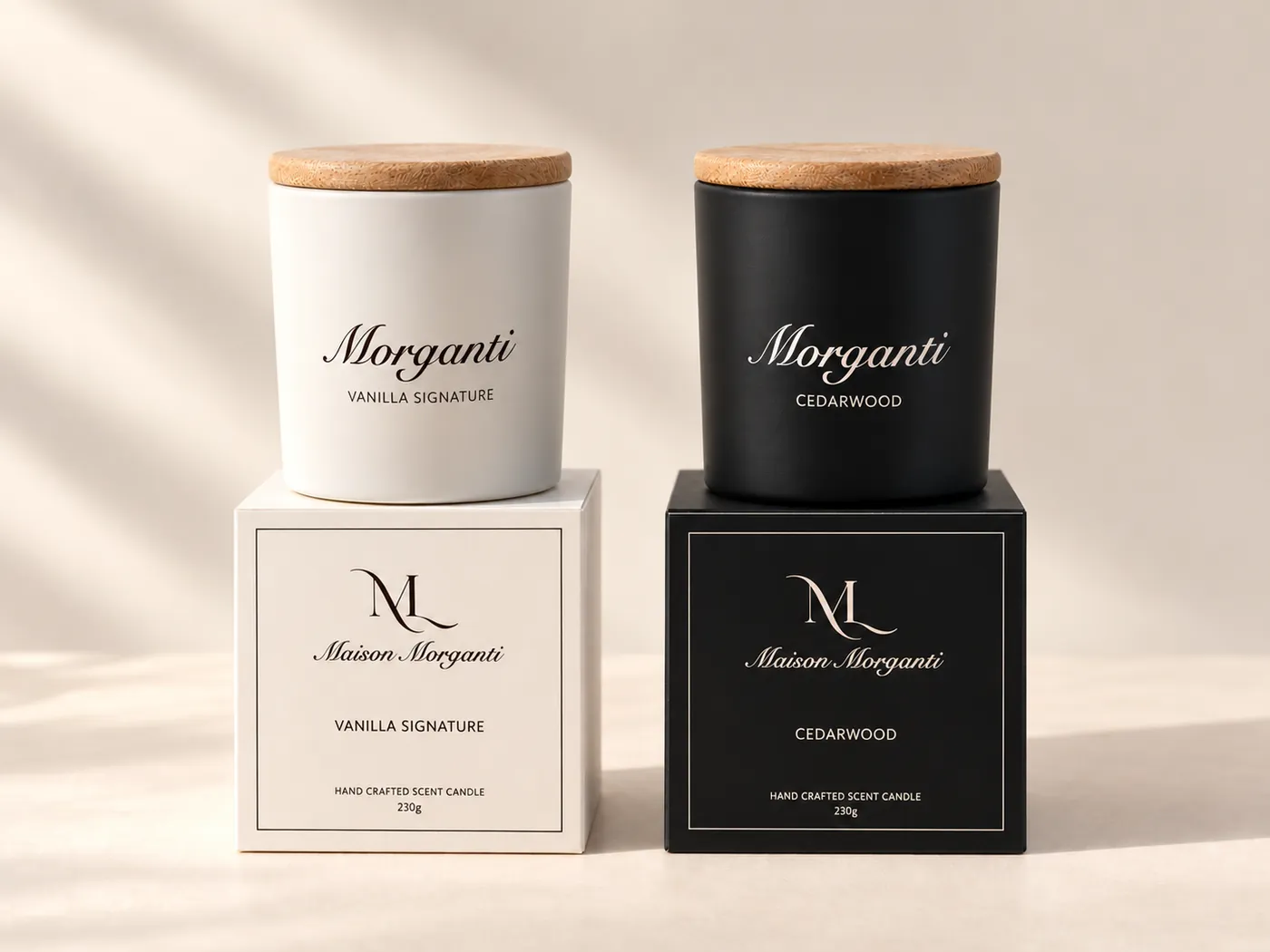
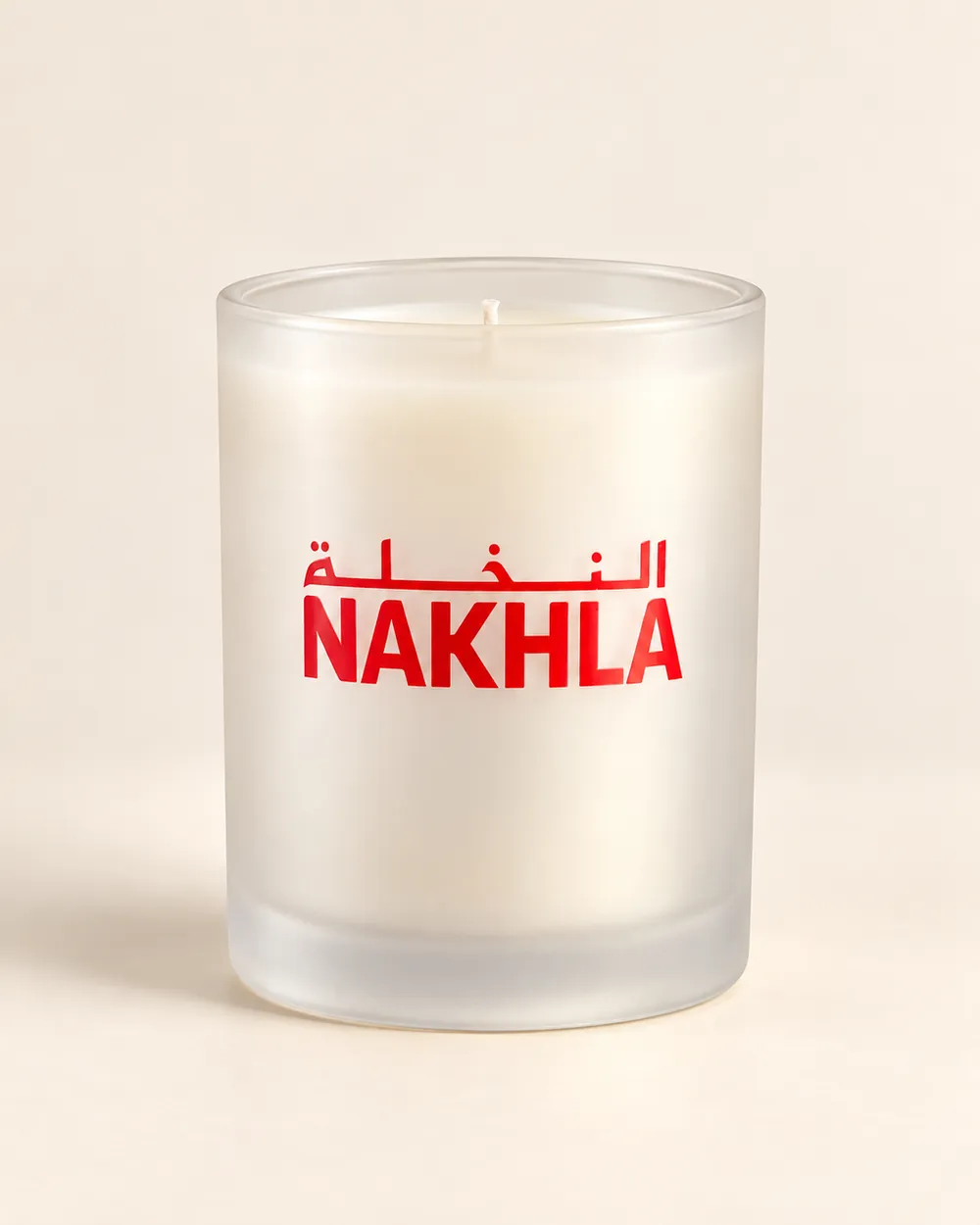
What we have actually shipped, for context on scale: 500 units for NAKHLA, 300 for ORA, 500 for EURO TECH, and over 1,000 for the Maison Morganti retail line. Those are the batch sizes this category runs at. More work is on our projects section.
When a candle is the wrong call
Five situations where we will tell you to buy something else, for a plain reason: a candle that was wrong for the job becomes a complaint, and complaints cost more than the order was worth.
Outdoor events in summer. A July rooftop activation, an outdoor expo, a site event in Dubai Industrial City. Wax sitting in a car boot or on an uncovered table in 45°C does not stay flat and presentable. If your handover point is outdoors between June and September, buy something that does not have a melting point.
Mass street handouts in the thousands. A festival where you are pushing 3,000-5,000 units to passing foot traffic is a volume game, and glass is the wrong material for it. Weight, breakage, and the fact that nobody wants to carry a jar around a festival for four hours. Tote bags and bottles exist for this job and they do it better.
Audiences that need a tool. Site supervisors, drivers, engineers, warehouse teams. If the recipient's working day would be measurably improved by a torch, a bottle or a power bank, give them that. A candle for a crew that finishes a shift at 11pm is a miss.
Per-unit budget under AED 70. Our 100 ml jar starts at AED 70 excluding VAT, before any branding. Below that number, the honest options are pens, notebooks and basic totes. We would rather lose the enquiry than quote you a candle that has had the wax, the jar and the lid cheapened until it reflects badly on both of us.
Deadlines under a week. Sticker branding runs about one week after artwork approval. Print around the jar takes 10-14 working days. If your event is Thursday and today is Monday, candles are not the answer, and no supplier who tells you otherwise is describing a real production line.
There is also a hard floor: 300 units per size. A 150-piece board dinner does not reach it on its own, though it often works as part of a larger programme.
Tiering one order: 100 ml for the room, 300 ml for the top table
This is where the candle earns its place in a way the alternatives cannot match, because one product line covers three price points without looking like three different decisions.
- All attendees. 100 ml jar, sticker branding, kraft box. From AED 70 excluding VAT for the candle, with branding and packaging landing around AED 80-85 per unit. Roughly 25 burn hours.
- Clients and partners. 200 ml jar, sticker or single-colour print, kraft box with a branded sticker. Lands around AED 105. Around 35 burn hours.
- VIP and top accounts. 300 ml jar, 360° print directly on the glass, printed box. Lands around AED 140. Around 45 burn hours, in the largest of the three standard formats.
Every tier shares the same brand, the same fragrance family and the same visual language, so the VIP box is recognisably the bigger version of the delegate gift rather than an unrelated purchase. Mixed jar finishes help here. Frosted glass reads more premium than clear at the same price, which is why both NAKHLA and ORA chose it.
Volume moves the number: 5% from 1,000 units, 7.5% from 3,000, 10% from 5,000. Delivery within Dubai is included on every order. Elsewhere in the UAE delivery is free from 1,000 units; for Saudi Arabia and the other GCC countries, delivery is quoted on request. We supply up to 15,000 candles a month, more by agreement. Full figures sit on our pricing section.
If this comparison lands on the side of candles, the next question is specification rather than selection, and we have written that up separately in our buyer's checklist for branded corporate candles: jar choices, branding methods, fragrance selection, packaging, and the order sequence.
FAQ
What corporate gifts work best in the UAE market?
Anything that survives the climate, carries no dietary or alcohol question, and fits a tiered structure. Gift sets at two or three levels are standard practice here, so items that scale in size and finish within one product family do better than one-size-fits-all merch. Items tied to Ramadan, Eid, National Day, Diwali or the year-end window also get planned and budgeted in advance, which makes them easier to get approved.
How long do employees actually keep corporate gifts?
Nobody can answer this honestly with a single number, and the figures circulating in promotional-product marketing come from the sellers themselves. What you can measure is contact time. A 100 ml candle gives about 25 burn hours, 200 ml about 35, 300 ml about 45. That is a verifiable span you can test with a sample. "Lasts a long time" is not.
Should we give branded candles or tech gadgets to clients?
Depends on the relationship. Tech reads as equipment and works for audiences who travel or work on devices all day, and a good power bank is genuinely wanted. A candle reads as a gift and enters the home rather than the laptop bag, which suits client and partner gifting and relationship-building. Many of our clients do both, with tech for internal teams and candles for the external list.
Do luxury gifts get better recall than budget options?
Perceived value and recall are not the same thing. A AED 500 item that sits in a drawer performs worse than a AED 105 item that gets used for a month. What does reliably hurt you is an item that visibly undershoots its context: a cheap giveaway at a premium event is remembered, just not the way you wanted.
What is the minimum order if we decide on candles?
300 units per size, with printed designs also starting at 300. Different fragrances can share one printed design, so you are not paying twice for two scents. Sample sets are AED 100 with a sticker or AED 250 with jar print, and the cost is credited against an order of 300 or more. Payment runs 50% to start production and 50% before dispatch.
If you are still at the shortlist stage, the fastest way to settle it is to hold the thing. Send us your headcount, your handover date and your per-unit ceiling, and we will send a sample set plus a straight answer on whether a candle fits the brief. If it does not, we will say so. Request a quote through our form or WhatsApp +971 55 281 9889.