Seasonal
Stocking seasonal candles for UAE retail chains: a calendar from Diwali to Mother's Day

UAE retail chains should plan seasonal candles back from a shelf date about three weeks before the occasion: sticker labels take about a week after artwork approval and print on the jar 10 to 14 working days, plus delivery. For National Day on 2 December, that means printed artwork approved by 20 October and sticker artwork by 2 November.
Diwali, on Sunday 8 November, comes first and is the tightest. For a shelf date of 18 October, printed jars need artwork approved by Friday 25 September and sticker labels by Thursday 8 October. Past those dates, Diwali still works in a shorter window, and the section on missed dates below shows how.
We supply soy candles hand-poured in Dubai to retail chains and distributors, wholesale and under private label, so the dates below are built on the lead times of our own orders. Two numbers drive everything, the sticker week and the 10 to 14 working days of print, and the rest of the calendar is arithmetic around them.
The full occasion list and our order windows sit on our seasonal collections page. This piece is the retail version of it, counted back from the day stock has to be on your shelf rather than the day the holiday falls. The brief dates there and on the occasion pages (11 November for National Day labels, 24 November for year-end, 18 January for Ramadan) are for gifts handed over close to the day; a shelf needs stock three weeks before the day itself, so a store's brief lands earlier than those dates.
The two lead times your whole season runs on
Decoration method decides the calendar more than anything else in the order.
A sticker label is the quick route: about one week from artwork sign-off to finished candles, with no slack built into that week. A sticker adds AED 5 per candle to the base price.
Print directly onto the jar runs 360 degrees around the glass and takes longer: 10 to 14 working days after sign-off, at AED 15 per candle in one colour. On a Monday to Friday week, 14 working days is roughly 19 calendar days. Buyers lose weeks by quoting "two to three weeks" to their own merchandising team and then discovering the clock only started when artwork was approved, not when the purchase order was raised.
Before sign-off there is a sample round. A sample with a sticker is AED 100, a sample with print on the jar is AED 250, and both come off the invoice once the order reaches 300 units. Allow one to two weeks for that round, including the courier and the internal argument about whether the logo green is the right green.
So the planning rule: approval date plus one week for stickers, approval date plus three calendar weeks for printed jars, and brief us one to two weeks before the approval date you want.
Working the dates backwards
For a retail shelf, plan seasonal stock in store three weeks before the day, the same rule our seasonal calendar uses. Gifting categories often go earlier, Ramadan earlier still, because the buying starts before the month does.
Take Diwali as the worked example, since it comes first. The holiday is Sunday 8 November. Three weeks before that is Sunday 18 October. Goods need to be in your warehouse a couple of days earlier, so call it Thursday 15 October. Sticker route: subtract one week of production, and artwork has to be approved by Thursday 8 October. Printed jars: subtract 14 working days from 15 October and you land on Friday 25 September.
Push the shelf date out to the last sensible moment, Sunday 25 October, and the printed-jar approval date becomes Friday 2 October, with no sample round and no slack anywhere. That is a coin toss, not a plan. So for Diwali 2026 the last printed-jar approval date is 2 October even in the best case, and the sticker route needs approval by 8 October for an 18 October shelf.
Run the same subtraction for every occasion and you get the two tables below. The approval column is the hard date. The order date sits one to two weeks before it.
Calendar: October to December 2026
| Occasion | Date | On shelf by | Sticker: approve artwork by | Printed jar: approve artwork by |
|---|---|---|---|---|
| Diwali | Sun 8 Nov 2026 | Sun 18 Oct | Thu 8 Oct | Fri 25 Sep |
| UAE National Day | Wed 2 Dec 2026 | Wed 11 Nov | Mon 2 Nov | Tue 20 Oct |
| Christmas and New Year | 25 Dec 2026 to 1 Jan 2027 | Fri 4 Dec | Wed 25 Nov | Thu 12 Nov |
If the Diwali dates in the first row are behind you, the section on missed dates below has what still works for the festival. National Day is the first date on this calendar where the printed jar is realistic. Printed jars need artwork approved by Tuesday 20 October, so the brief and the sample round belong in the first half of October. Sticker artwork can wait until Monday 2 November, and the Al Sadu collection carries its Sadu weave on the label and the box. For a sense of the finished look, our NAKHLA exhibition order was 500 candles with red branding on frosted glass.
Christmas and year-end stock has a quirk. If your mall puts festive product out in the last week of November, the shelf date moves earlier than the arithmetic above and the approval date moves with it. If your landlord's campaign starts 26 November, subtract from that, not from 25 December.
Calendar: February to May 2027
| Occasion | Expected date | On shelf by | Sticker: approve artwork by | Printed jar: approve artwork by |
|---|---|---|---|---|
| Ramadan | around Mon 8 Feb 2027 | Mon 18 Jan | Thu 7 Jan | Thu 24 Dec 2026 |
| Eid al-Fitr | around Wed 10 Mar 2027 | Wed 17 Feb | Fri 5 Feb | Mon 25 Jan 2027 |
| Mother's Day (UAE) | Sun 21 Mar 2027 | Sun 28 Feb | Thu 18 Feb | Fri 5 Feb 2027 |
| Eid al-Adha | around Sun 16 May 2027 | Sun 25 Apr | Thu 15 Apr | Fri 2 Apr 2027 |
Ramadan and both Eids follow the moon, so treat those dates as expected and allow a day or two either side. The shelf date is what matters anyway, and it does not move much. Our Ramadan page asks for label briefs by 18 January because it counts back from gifts handed over before the first iftar; for a shelf, 18 January is the day stock should already be in store.
The table puts the Ramadan printed-jar approval on 24 December, right into the year-end slowdown, so a December brief that drifts into January costs you the printed route for Ramadan. And Eid al-Fitr sits eleven days before UAE Mother's Day, which means one production slot can carry both buys if you plan them together in January. We go deeper on the Ramadan and Eid buying cycle in our Ramadan and Eid candles wholesale guide.
Why a Dubai run lands sooner than an import
An imported seasonal buy runs on two clocks: the supplier's production time, then freight and customs clearance on top. When you compare quotes, count each one from artwork sign-off and include the transit.
Our lead times hold because the candles are made in Dubai. A delivery inside the UAE crosses no border between artwork approval and your delivery note, so there is no clearance step to slip.
That matters most in the gap between a missed deadline and a dead season. A supplier quoting six weeks from 20 October cannot put National Day product on an 11 November shelf. A run of 10 to 14 working days can, if the artwork is signed. If you are sourcing from outside the region, add customs clearance and a shipping window to every date in the tables above.
We supply up to 15,000 candles a month, more by arrangement.
How many to order for one season
The minimum is 300 units per size. A printed design also starts at 300 units, and different scents can share one design, which is the single most useful fact for a seasonal buy: three scents in 200 ml under one printed jar design still hit the minimum with 100 of each.
For quantity, work from your own floor rather than a percentage someone invented. Count how many weeks the product sits on the shelf, how many facings you will give it, and what your normal candle sell-through per week looks like in that store. Multiply, then add the display units you will lose to handling. If you have last year's figures for the same occasion, use them and ignore everything else.
Two constraints shape the number more than any forecast:
- A printed-jar reorder takes the same 10 to 14 working days, which usually lands after the occasion, so plan the first order as the only one.
- A sticker top-up in about a week is sometimes possible, depending on the production slot and the jar you chose. Ask before you build a plan around it.
Volume brackets reward the full-season buy: 5 percent off from 1,000 units, 7.5 percent from 3,000, 10 percent from 5,000. Delivery within Dubai is included, elsewhere in the UAE it is free from 1,000 units, and for Saudi Arabia and the other GCC countries it is quoted on request. Our retail collection for Maison Morganti ran over 1,000 candles, the size where the discount and the free freight start working on your landed cost.
Payment is 50 percent to start production and 50 percent before dispatch.
What a shelf-ready unit costs
Published prices per candle for 300+ units per size, excluding VAT: from AED 70 for 100 ml, AED 90 for 200 ml and AED 110 for 300 ml. Each includes the jar (clear, matte black or frosted white; 100 ml in clear only), a standard wick, soy wax, a lid in bamboo or in silver or gold metal, and one base scent. Burn time is roughly 25, 35 and 45 hours, and the single-candle gift builds on our price list are based on the 200 ml.
Decoration and packaging are per unit on top: sticker AED 5, single-colour print on the jar AED 15, kraft box AED 5, sticker on the box AED 5, printed box AED 15, fabric pouch AED 3. A wooden wick adds AED 15.
Worked examples from the price list, all excluding VAT: a 100 ml with a sticker starts at AED 75. A 200 ml with a sticker, a kraft box and a box sticker starts at AED 105, and the 300 ml version of the same build at AED 125. A printed jar in a printed box starts at AED 120 for 200 ml and AED 140 for 300 ml. Final numbers move with scent, jar design and packaging, so the quote gets built per project. The full list sits on our pricing section.
Which scents belong to which occasion
Our range runs to more than 150 scents in six families, and the split between occasions is not subtle in this market.
Ramadan and Eid buying leans towards resinous and oriental notes. For Ramadan our Noor set runs amber oud, myrrh with luban, and rose with saffron. For both Eids the set moves lighter and sweeter: rose with white musk, neroli blossom, sweet oud. A Ramadan gift box with alpine cedar in it will sit on your shelf until March.
Western festive buying goes the other way. Our Winter Glow set is cinnamon and clove, vanilla gingerbread, alpine cedar with pine. For Diwali, saffron sandalwood, jasmine rose and amber marigold. For UAE National Day the heritage read works better than anything floral: cardamom coffee for Arabic coffee, honey dates, sea breeze with white musk. Mother's Day moves on soft florals, magnolia and pear, gardenia and honey, lavender with chamomile.
Our national and religious collections work in colour and pattern only: no flags, no official emblems, no scripture. The collection images on the site are concepts: the jars on offer are clear, matte black and frosted white (100 ml in clear only), and the availability of each scent gets confirmed on your sample before anything goes into production.
If you have already missed the date
This happens every season, and most of it is fixable.
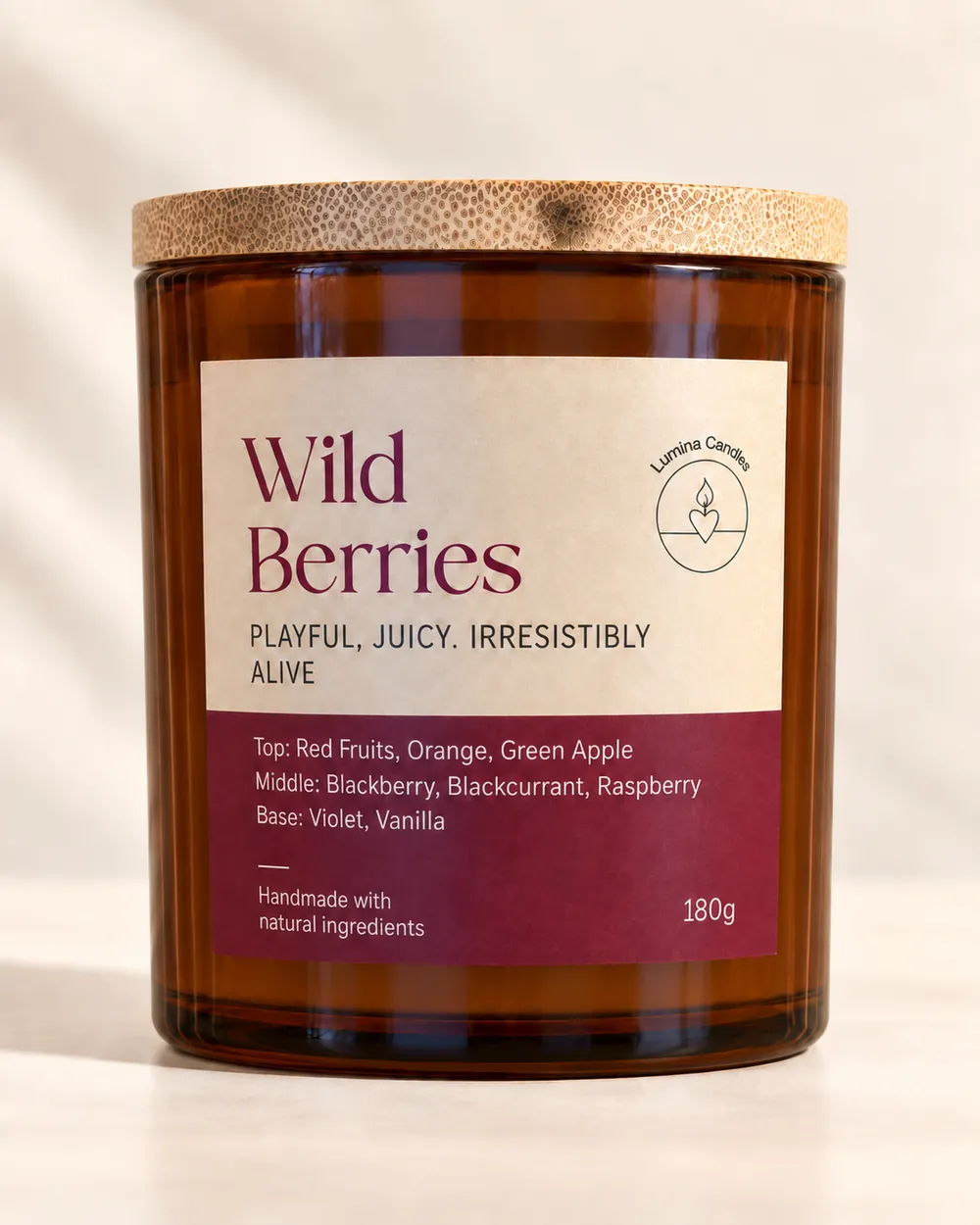
Switch the decoration, not the occasion. A sticker instead of print on the jar buys back roughly two weeks, and on a frosted white or matte black jar a well-designed label reads as premium rather than as a compromise. Our EURO TECH order went this way: 500 candles in clear glass with bamboo lids and sticker labels.
Move the branding to the box. A plain jar in a kraft box with your logo sticker fits the sticker window, and the box branding costs AED 10 per unit: AED 5 for the box, AED 5 for the sticker.
Use a collection that already exists. Festival of Lights for Diwali comes with its design finished, so the brief comes down to quantity, jar and the scent check on your sample. Our Diwali page takes briefs for labels in that design until 15 October, for goods ready by 5 November: enough for a gift counter or a short selling window before the festival.
Or take the loss on this occasion and lock the next one. Once Diwali is out of reach, put the effort into National Day, with printed artwork approved by 20 October or sticker artwork by 2 November, and get the Christmas brief in by the end of October so printed artwork can be approved by 12 November. That beats rushing an order that arrives after your campaign ends. Stores selling candles under their own brand usually plan two occasions ahead for exactly this reason, which is the model behind private label programmes.
FAQ
When should I order candles for Diwali in the UAE?
For a retail shelf around 18 October, three weeks before Diwali on 8 November, printed jars need artwork approved by 25 September and sticker labels by 8 October. Past those dates, our Diwali page takes briefs for labels in the Festival of Lights design until 15 October for goods ready by 5 November, which suits a gift counter or a corporate order better than a full shelf.
What is the typical lead time for a wholesale candle order in Dubai?
Ours is about one week for sticker labels and 10 to 14 working days for print on the jar, counted from artwork approval, plus one to two weeks for the sample round beforehand. Expedited production is possible by agreement. If you buy outside the country, add freight and customs clearance to whatever production time you are quoted.
How far ahead should a retail chain order for Ramadan and Eid?
Ramadan 2027 is expected to begin around 8 February, so the shelf date is around 18 January: printed artwork needs approval by 24 December 2026, sticker artwork by 7 January. Eid al-Fitr follows around 10 March, with printed approval by 25 January. Plan Eid al-Fitr and Mother's Day together in one January order, because Mother's Day on 21 March sits eleven days after Eid and inside the same production window.
What is the minimum order for a seasonal collection?
300 units per size, and 300 units for a printed design. Scents can share one design, so a three-scent 200 ml set works at 100 units each. Samples are AED 100 with a sticker or AED 250 with print on the jar, credited back once the order reaches 300.
Can a seasonal design be customised in time if I brief you late?
Sometimes, and the honest answer depends on which side of the approval date you are standing. Inside the sticker window, yes. Inside the printed-jar window, faster production is possible only by agreement and depends on the slot, so we will usually tell you to switch to stickers rather than promise a date we might miss.
If you are planning October 2026 to May 2027, the two dates to settle first are National Day printed artwork, due 20 October, and Christmas printed artwork, due 12 November. Send the occasion, the size, the quantity and whether you want your own brand or ours through the quote form or on WhatsApp at +971 55 281 9889, and we will come back with a sample plan and the exact production dates for your shelf. Buyers working across several stores or several brands usually start at our trade programme.