Product guide
Unscented candles for corporate orders: when fragrance-free wins
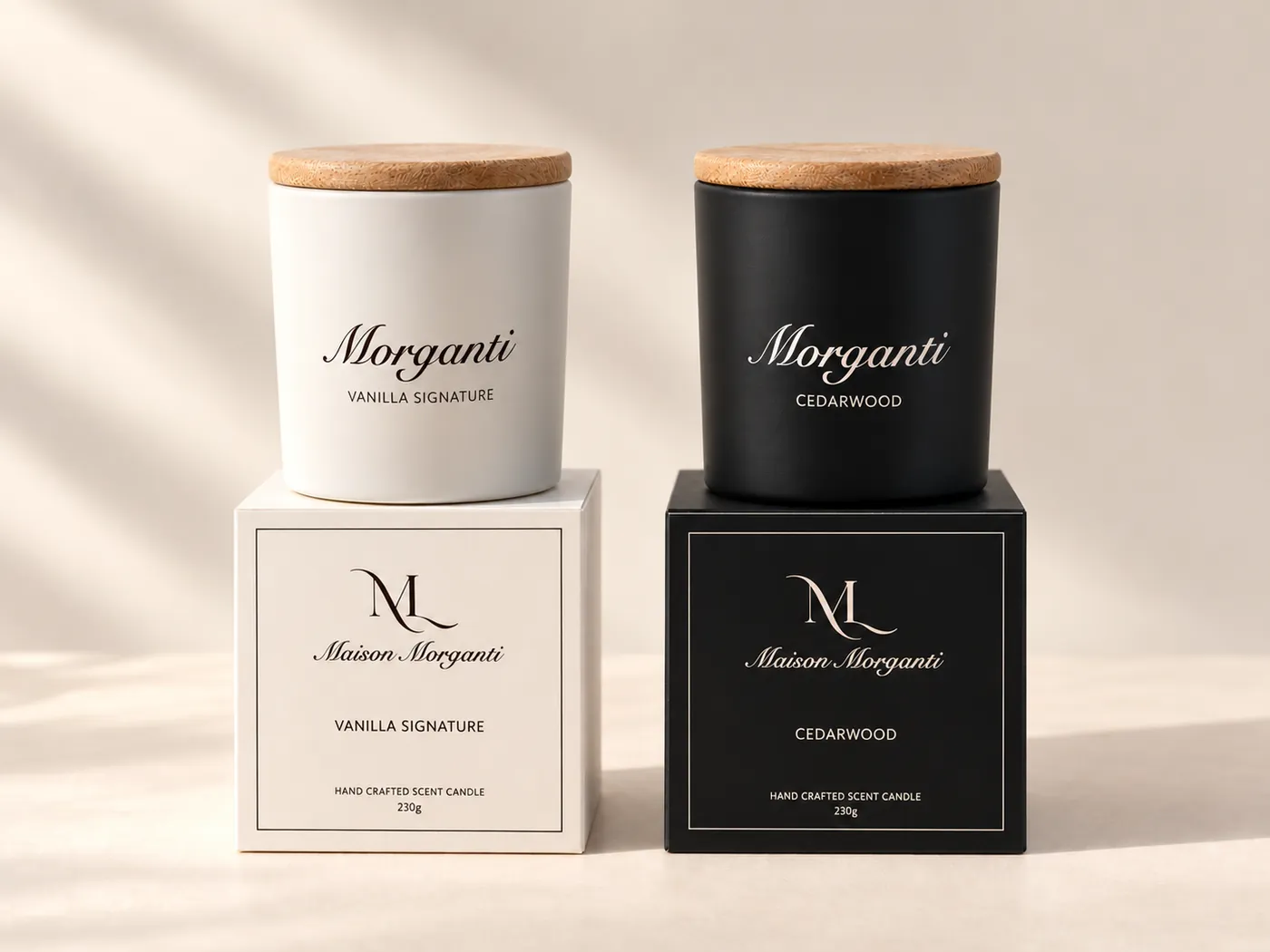
Fragrance-free wins when the room already has a smell it needs to keep: hotel and spa groups running their own scent, clinics with a fragrance-free policy, restaurants, and gift lists you cannot survey. Our published burn windows go by size, not by fragrance, at roughly 25 hours for 100 ml, 35 for 200 ml and 45 for 300 ml.
Most enquiries reach us with the fragrance already picked, usually because somebody liked it in a showroom. For a retail line that instinct is right, since scent is what moves a candle off a shelf. On a gift or hospitality order, fragrance is the part most likely to come back as a complaint.
When fragrance-free wins
Across the orders we quote for corporate gift programmes, the pattern holds: fragrance-free wins wherever the candle has to share a room with something else, and scent wins wherever the candle itself is the product.
How the enquiries we see usually split:
| Buyer and setting | Usual default |
|---|---|
| Hotel or spa group with a signature scent | Unscented |
| Clinic, lab or wellness operator with a scent policy | Unscented |
| Restaurant tables and private dining | Unscented |
| Retail chain or distributor selling candles | Scented |
| Seasonal gift collection with a story attached | Scented |
| Mixed staff list, several hundred units | Unscented |
Branding does not change in any of those rows. A fragrance-free candle still carries a sticker at AED 5 per unit or one-colour print on the jar at AED 15, excl. VAT, over the published base of AED 70 for 100 ml, AED 90 for 200 ml and AED 110 for 300 ml at 300 pieces per size. That list is written per size rather than per fragrance, so an unscented run is quoted off the same base, and the final number depends on jar, branding and packaging.
Hotels and spas already have a scent
A hotel group that has paid for a signature scent and pushed it through the HVAC is not looking for a second opinion in the lobby. The candle there has one job: light, in a jar that matches the interior. Anything else it emits argues with an asset the brand already owns.
Spa treatment rooms are the sharper case, because the therapist works with oils chosen for the treatment and a scented candle competes with them all session. A 200 ml jar runs about 35 hours, so a room lit four hours a day gets a little under nine days from one jar. Our hotel, spa and restaurant orders usually land as 200 ml for treatment rooms and 300 ml for lobbies, in black matte or white frosted glass. Clear glass covers all three sizes, and 100 ml comes in clear only.
Clinics, wellness and offices with a fragrance-free policy
Fragrance-free rules are normal in healthcare and increasingly common in shared offices. Where one exists it is usually written into the tender, so a scented gift fails at the receiving dock rather than in the meeting where it was chosen.
Procurement usually asks for documentation here: soy wax and fragrance safety data sheets, IFRA Category 12 certificates, an ingredient list for your label and our trade licence. Dropping the fragrance shortens that file without emptying it. Printed glass also reads better than a sticker; print on the jar takes 10 to 14 working days after artwork approval, against about a week for stickers.
Restaurants and food service
A candle on a dining table sits closer to a guest than anything except the plate, and it competes hardest with the dishes a kitchen is proudest of. Sommeliers raise the same objection about wine service.
So restaurant groups mostly buy unscented for the floor and keep scented jars for washrooms and reception. At 100 ml, about 25 hours of burn against four hours of service a night gives roughly six nights per jar per table, and multiplying that by covers and days gives the monthly figure that decides whether the order sits at 300 pieces or 3,000, where the discount reaches 7.5%.
Shipping across the GCC
Fragrance oils are regulated materials, and whether a finished candle inherits any of that depends on the fragrance load, the flashpoint and the carrier. Air and road freight can answer differently, and the answer varies between forwarders. Get it in writing before you commit to a launch date, and ask us for the fragrance safety data sheets and IFRA certificates to pass on.
That conversation disappears on some lanes once the fragrance is out, which is why buyers shipping into Saudi Arabia sometimes split a programme: scented for the UAE, fragrance-free for anything crossing a border. Delivery inside Dubai is always included, other emirates are free from 1,000 units and carry a surcharge below that, and the rest of the GCC is priced on request.
Private label: why a neutral base is easier under someone else's brand
A brand launching its own candle line settles the look long before it settles the smell. Jar, label and box get signed off months before anybody agrees on a fragrance.
A fragrance-free base lets the first run go ahead on the design alone: one specification, one wick test, one sample to approve. When the brand does pick a scent, the jar and box are already proven, so the second run changes one line in the spec. Our minimum is 300 pieces per size, a printed design starts at 300, and several fragrances can share one printed jar. Fragrance-free is the simplest version of that: one SKU per size, no slow-selling scent stranding inventory. Full detail sits on our private label page.
Mixed teams, allergies and gifts nobody has to re-gift
Fragrance is the most personal choice in a gift box, and on a list of 500 names it carries the widest spread of opinion. Some people avoid scented products at home. Some live with someone who does. A candle that gets passed along costs as much as one that gets lit.
GCC households add a second layer. Bakhoor and oud are the familiar scents in many homes, and a Western fragrance can read as an odd fit beside them, particularly during Ramadan. Unscented sidesteps the judgement call and leaves the glass, the branding and the box. Where the gift still has to feel considered, spend the difference on packaging: kraft box at AED 5, printed box at AED 15, fabric pouch at AED 3 per unit, excl. VAT.
What to check in an unscented candle
Fragrance hides a lot. Take it away and the wax, wick and jar are all that is left, so the sample deserves a harder look than usual.
- Burn the whole sample, not the first twenty minutes. Tunnelling and a drowned wick show up hours in.
- Watch the jar rim for soot. Fragrance oil is fuel in the wick, so a wick sized for one fragrance load behaves differently in a plain soy fill. Prove the pairing on your own spec, not on a scented version of the candle.
- Confirm the wax and the burn window: soy, and about 25 hours at 100 ml, 35 at 200 ml, 45 at 300 ml.
- Check the glass in heat. Soy softens before it melts, and a jar left in direct sun loses the smooth top that makes a gift look new.
- Confirm the lid. Bamboo or metal in silver or gold is included in the base price, and a lid that goes back on keeps dust off bare wax.
Samples cost AED 100 with a sticker and AED 250 with print on the jar, and both are credited into orders from 300 pieces, so a proper burn test is not a cost centre.
When scented is still the right call
Fragrance-free is a poor default for a candle that is sold rather than given. Scent is the product on a shelf, and a distributor or retail chain stocking an unscented jar competes on glass and price alone, which is a harder fight than it looks. Seasonal collections work the same way, since the fragrance carries the story.
The same holds for VIP gifting, where you want a recipient to remember the brand six months later. Smell does that better than a printed logo, and with over 150 fragrances available and several able to share one printed jar, a scented programme need not be complicated.
So ask who the candle has to live alongside. Another smell, a policy or a plate of food, and fragrance-free is the safer order. A shelf or a memory, and you pick a fragrance and commit. Send us the setting, the quantity and the deadline and we will quote both versions on the same brief: our quote form takes a minute, or message us on WhatsApp at +971 55 281 9889.
FAQ
Can we put scented candles on restaurant tables?
You can, and plenty of venues do, but it works against the kitchen. The candle sits closer to a guest than anything except the plate, so its fragrance competes with the food and with wine service. Most restaurant groups we supply take unscented for the dining floor and scented jars for reception.
Are unscented candles cheaper than scented ones?
Our price list is written per size rather than per fragrance, so an unscented run is quoted from the same base: from AED 70 / 90 / 110 per unit for 100 / 200 / 300 ml, excl. VAT, at 300 pieces per size. Going fragrance-free saves you on risk rather than on wax.
What is a fragrance-free policy in a hotel or clinic?
A written rule that scented products are not used in certain areas, common in healthcare and in some corporate and lab environments. Hotel groups use the same clause to protect their own signature scent. It usually appears in the tender documents, so read it before you choose a fragrance.
What changes when the order ships outside the UAE?
Fragrance oils are regulated materials, and whether a finished candle picks up any of those rules depends on the fragrance load, the flashpoint and the carrier. Confirm it in writing with your forwarder; we supply fragrance safety data sheets and IFRA Category 12 certificates on request. Delivery inside Dubai is included, other emirates are free from 1,000 units, and the rest of the GCC is priced on request.
Does unscented work as a base for private label?
It is the easiest starting point. Design, label and box get approved on their own, with one specification and one wick test, and the brand can add a fragrance on the second run. Minimum is 300 pieces per size, printed designs start at 300, and several fragrances can later share the same printed jar.
What about allergies and sensitivity on a large gift list?
We make no health claims and we cannot screen a recipient list for you. The practical point: on a list of several hundred names nobody has asked everyone what they can live with, and fragrance draws the widest range of reactions. Fragrance-free takes the question off the table.