Production
Candle production lead time in the UAE: a 500-unit run

Production of a 500-candle order takes about a week with sticker labels and 10 to 14 working days with print around the jar. Both clocks start when you approve the physical sample and the final artwork. Buyers usually lose their date before that point, to a specification that keeps changing and a slow internal sign-off.
This is written for procurement at a retail chain, a distributor, a hotel group, a developer or a gifting company. 500 units is a realistic first order: big enough to take a real production slot, small enough that nobody wants to commit to 5,000 before holding a finished candle. Our minimum is 300 pieces per size and we supply up to 15,000 candles a month, so a 500-unit job does not strain the schedule. The schedule is still a queue, though, and a confirmed order takes the slot ahead of an order that is still being discussed.
What follows is the order stage by stage, seen from the buyer's side, with the point where each stage tends to stall. The candles are hand-poured in Dubai rather than shipped in from abroad, and how we supply them is set out on our candle supplier page for the UAE.
Stage one: freezing the specification
Nothing moves until the spec stops changing. For a candle run that means size, fragrance, jar finish, lid, wick, branding route and packaging, all written down in one place.
Sizes are 100, 200 and 300 ml, which burn for roughly 25, 35 and 45 hours. Hotel groups and amenity programmes usually land on 100 ml because it gets replaced often. Retail and gifting programmes mostly sit at 200 ml. Clear jars come in every size; matte black and frosted white come in 200 and 300 ml only. Lids are bamboo or metal in silver or gold. We carry more than 150 fragrances in six families, and if you arrive with a scent direction instead of a name, we shortlist options from the range for the sample.
Published pricing for orders from 300 pieces per size, excluding VAT, starts at AED 70 for 100 ml, AED 90 for 200 ml and AED 110 for 300 ml. That base includes the jar in any of the finishes above, a standard wick, soy wax, a lid in bamboo or in silver or gold metal, and one base fragrance. Branding and packaging are per-unit add-ons: sticker from AED 5, single-colour print on the jar from AED 15, kraft box from AED 5, sticker on the box from AED 5, printed box from AED 15, fabric pouch from AED 3. A wooden wick is from AED 15. Packaging design is quoted on request.
So a 200 ml candle with a sticker, a kraft box and a sticker on the box starts at AED 105 per unit, and the same candle with print on the jar in a printed box starts at AED 120, both excluding VAT. Your final number still depends on the fragrance, the jar design and the packaging you choose, which is the whole reason we freeze the spec before quoting a date.
One thing to settle at this stage is how many fragrances the run carries. If you want several scents on the shelf, say so now. Different fragrances can share one printed design, so a split does not mean new artwork. Each fragrance is still confirmed at the sample stage, though, and every extra scent is one more candle for your team to smell and sign off.
What slows this stage down is an open line in the spec. "We will decide the lid later" means there is no sample to send yet, and sample approval is what starts the clock on the published lead times.
Stage two: the sample, and why your approval sets the date
Every run starts with a physical sample. A sample with a sticker is AED 100 and a sample with print on the jar is AED 250. Both are paid upfront and credited against an order from 300 pieces. A fragrance picked by name from the range is the quick route. A scent direction such as "warm oud, not too sweet" can take an extra round while your team compares candidates side by side.
The published lead times do not shrink or stretch with your approval. They start from it, so every day a sample waits on a desk is a day added to the delivery date. No supplier can compress a buyer's internal approval chain, and in a first order that chain is the single biggest variable. Naming one approver before the sample ships removes more calendar risk than anything that happens after approval.
Buyers most often lose time here by approving a sample from a photo and then asking for changes once the physical piece arrives, or by sending the sample to a brand team that is mid-campaign or on leave. We cover the testing side in more depth in our guide to candle samples and testing.
Approval in writing is enough. A WhatsApp message confirming the sample, the fragrance and the artwork version is what we work from.
Stage three: the slot, the deposit and final artwork
Payment is 50% to start and 50% before dispatch, and international payments are accepted. The deposit is what books the production slot. Until it arrives, a quoted date is an estimate rather than a booking.
Send the final artwork with the deposit. The approved artwork version is the one that goes on the jars, so the file that arrives with the payment should be the print-ready one, signed off by whoever owns your brand. A logo tweak after the deposit is a new approval, and the published lead times count from that new approval.
If the order uses printed boxes, the box artwork needs the same sign-off as the jar, and it is easy to forget until the jar artwork is done. Send both files together so neither waits for the other.
A tight date is best raised at spec freeze, before the deposit. At that point the branding route can still be chosen around the date, and expedited production is possible by agreement.
Stage four: the production window
Once the deposit is in and the artwork approved, the order goes into production and the published lead time starts to run. That is why a supplier who quotes a shipping date before seeing your spec is guessing: the date depends on the branding route and on the day you approve the sample.
The one thing that resets this window is a change. A different fragrance, a new artwork version or a switch from sticker to print turns an approved order back into an unapproved one, and the lead time counts again from the new approval. If someone senior wants a say on the candle, put the approved sample in front of them now. The finished cartons are the wrong moment for a first opinion.
Use the window for the work on your side. Book the receiving slot at your warehouse, store or hotel, and name the person who will check the delivery against the approved sample.
Stage five: checking the run against your approved sample
The approved sample is the reference for the whole run. It fixes the fragrance, the jar finish, the lid, the artwork version, the print or foil colour and where the branding sits. Once testing is done, keep it boxed and out of the heat, with the approval date and the artwork version written on the box. That candle is what you will hold the delivery against, and it settles most questions faster than a thread of photos.
Your acceptance check happens when the cartons arrive, so agree now who does it and how. Open candles from several cartons, not only the first one, and compare them with the sample:
- Artwork, colour and position of the branding, foil included.
- The glass: chips, cracks and the rim.
- Lid fit and finish.
- Fragrance, smelled unlit, next to the sample.
- The count per carton against your order.
If something is off, raise it on the day with photos, while the sample and the delivery are in the same room.
One thing to expect in a first delivery: soy wax contracts as it cools and can pull away from the glass in patches. It is cosmetic and does not affect burn time or scent. It shows most on clear glass and least on frosted white or matte black. For a retail programme where candles sit under shop lighting for weeks, that is an argument for those two finishes, available at 200 and 300 ml, and we will raise it at the spec stage, before you have seen any cartons.
Stage six: branding, packing and paperwork
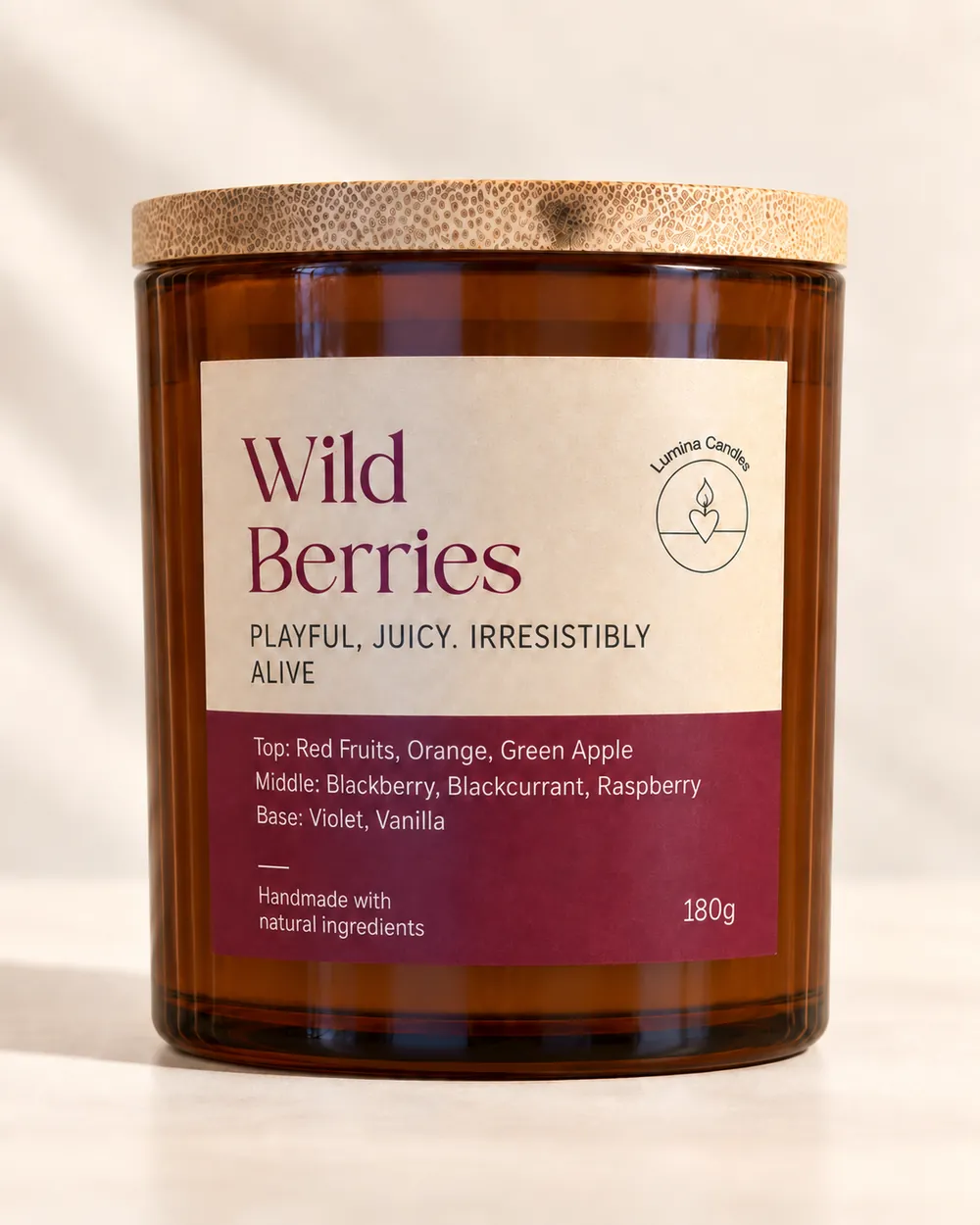
Here the two routes separate properly. A stickered run takes about a week from approval. Print around the jar takes 10 to 14 working days, and more has to be final before it starts: the jar finish, the artwork and the print colour, because a print is permanent once it is on the glass. Foil in gold, rose gold or silver is part of the printed route and follows its timing.
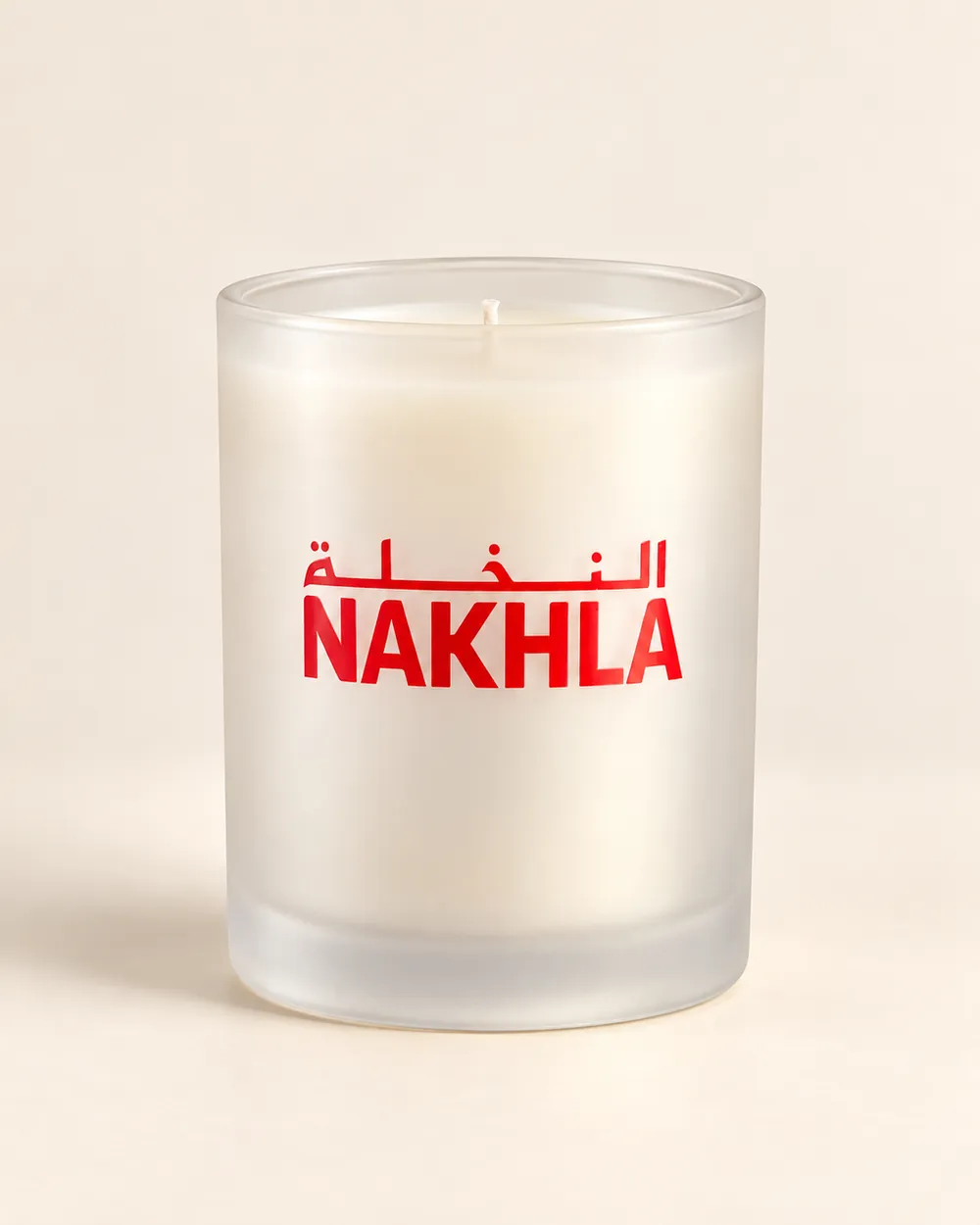
Our past work runs from 300 to more than 1,000 candles a project: branding on frosted glass for NAKHLA (500) and ORA (300), sticker labels on clear jars for EURO TECH (500) and a retail collection with matching printed boxes for Maison Morganti.
Packing follows the spec, whether that is a kraft box with a sticker, a printed box or a fabric pouch. A box approved late holds up candles that are otherwise ready, which is why stage three asks for the jar and box files together.
Documents are available on request: safety data sheets and a technical data sheet for the soy wax, IFRA conformity certificates for candle use (Category 12) from our fragrance suppliers, fragrance safety data sheets and an ingredient list for your label. If your compliance or receiving team needs any of them before the goods arrive, ask at spec stage.
If your receiving warehouse wants case counts a particular way, barcodes on the outer carton or a specific delivery note format, that belongs in the spec at stage one. Discovering it on packing day is how a finished order waits for dispatch longer than it needed to.
Stage seven: delivery across the UAE, the Gulf and Saudi Arabia
Delivery inside Dubai is included on every order. Elsewhere in the UAE it is free from 1,000 units, and below that it is charged and shown in the quotation. For Saudi Arabia and the other GCC countries, delivery is quoted on request.
That matters at 500 units. 500 candles to a Dubai office or a Dubai warehouse ship with delivery included. The same 500 candles to Abu Dhabi or Riyadh carry a delivery charge, which we put in the quotation rather than leaving it to surface at the end. A 500-unit run also sits below the first volume discount: 5% from 1,000 pieces, 7.5% from 3,000 and 10% from 5,000, with individual terms from 10,000. If your annual programme runs to 3,000 candles in four drops, put the whole programme in the brief and ask how the discount steps apply before you commit to four separate orders.
Transit time depends on the carrier and on what the destination can receive. A free zone warehouse with a loading dock is straightforward. A hotel with a narrow delivery window and a service lift booking is a different job, and the slot has to be agreed with your facilities team in advance. When the cartons land, run the stage five check before the delivery is signed off.
Shortening the lead time
Most of the time you can save sits on your side. In rough order of how much each step saves:
- Decide sticker or printed jar before the sample. That single choice is the difference between about a week and 10 to 14 working days.
- Name one person who can approve the sample, and have them approve in writing.
- Choose fragrances by name from the range for the first run, and leave the search for a new scent to the repeat order.
- Put one printed design across several fragrances instead of a design per scent.
- Send print-ready artwork for the jar and the box with the deposit, not after it.
- Pay the 50% to take the slot. A quotation does not hold a production slot.
- Confirm the delivery address, receiving hours and carton marking requirements at spec freeze.
Add it all up and a first 500-unit run usually takes several weeks from first enquiry to delivered cartons, because the sample and approval stage has no fixed length. The published lead times count from the day you approve. We would rather tell you that plainly than quote a date we have to walk back.
FAQ
What is the candle production lead time from a confirmed order to a Dubai warehouse?
After sample approval and final artwork, stickered orders take about a week and printed jars take 10 to 14 working days, plus delivery, which is included inside Dubai. The part only you can shorten is what comes before approval: spec decisions, the sample itself and your internal sign-off. Send us the spec and we will quote a date against it rather than a generic range.
Can you run a 500-candle order faster than that?
Expedited production is possible by agreement, so the answer depends on your date and your spec. The quickest spec is a fragrance chosen by name from the range, a sticker instead of print on the jar, and kraft packaging; a stickered run takes about a week after approval. The sample still has to be approved before the run starts, because it is the reference for the whole order. If the deadline is genuinely immovable, tell us the date first and we will build the spec backwards from it.
When should we place a seasonal order for Ramadan, UAE National Day or Diwali?
Work backwards from the date you need stock on shelves or gifts in hands: allow for delivery, then the branding lead time, then the sample and approval stage before that. Our seasonal collections page carries the order calendar for each occasion, with separate brief dates for printed jars and for labels. For collection designs it asks for the brief five weeks before handover for printed jars and three weeks before for labels, and those are the dates to plan against. Collection images there are concepts: jars available now are clear, matte black and frosted white (100 ml in clear only), and the availability of a specific fragrance is confirmed on your sample.
Why is a repeat order faster than the first one?
Because the slow stages are already behind you. The spec is frozen, the artwork exists in print-ready form, and the approved sample from the first run is still the reference. Once the fragrances are confirmed as still available, a repeat of the same specification can go into production as soon as the deposit is paid, and only the published lead time remains. If you do want a change, treat it as a new sample on the changed item rather than as a tweak, and the repeat run stays predictable.